
Why Do Spicy Nicotine Pouches Feel So Hot?
Spicy nicotine pouches can create a warming, tingling, or burning sensation. A recent, not-yet-peer-reviewed preprint study points to capsaicinoids (the compounds in chili peppers) binding to TRPV1 sensory receptors in the mouth as a possible explanation.
- Heat or spiciness is a sensory signal, not a measure of temperature.
- Capsaicinoids can activate TRPV1, a receptor that detects heat.
- Scientists measured capsaicinoids in several U.S. nicotine pouches labeled with “heat” and “spicy.”
- The researchers analyzed ingredients and tested product extracts in engineered cells in the laboratory.
What Does "Spicy" Actually Mean?
When a pouch feels hot, the product has not raised the temperature of your mouth in the way a hot drink would. Instead, certain chemicals can switch on sensory nerve pathways. This type of chemical sensation is known as chemesthesis. Cooling from menthol in mint, the fizz of carbonation, and the burn of chili peppers are familiar examples.
What Is TRPV1?
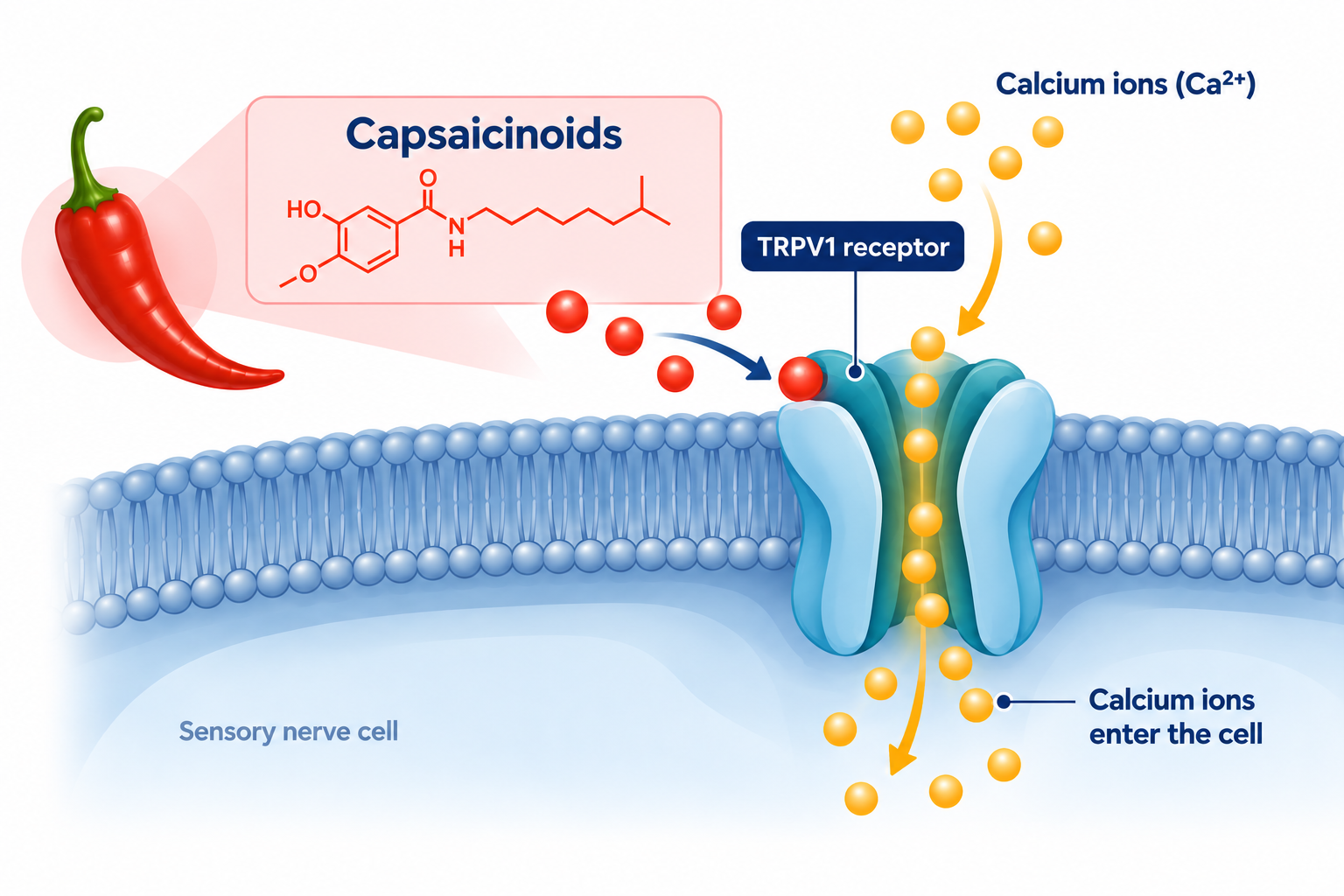
TRPV1—short for transient receptor potential vanilloid 1—is a microscopic protein found on some sensory nerve endings, including nerves in the mouth. You can think of it as an alarm sensor. When it detects certain kinds of heat or chemical compounds, it opens a channel in the nerve cell, allowing positively charged calcium ions to enter the cell. This starts an electrical signal that travels to the brain.
TRPV1 can be activated by high temperatures, acidic conditions (hydrogen ions), and capsaicin—the compound best known for making chili peppers taste hot. Related capsaicinoids (e.g., dihydrocapsaicin, nordihydrocapsaicin, nonivamide) can activate it too. The receptor does not measure a food or pouch’s temperature like a thermometer. Instead, it responds to a stimulus and sends a signal to the brain.
That is why capsaicinoids can create warmth, tingling, or burning even when there is no actual rise in temperature.
What The Researchers Studied
A 2026 preprint study (which has not yet undergone peer review) tested oral nicotine pouches sold in the United States with “heat” or “spicy” descriptions. They made water-based extracts of the pouch contents and applied those extracts to human cells engineered with human TRPV1. The team monitored changes in calcium inside the cells as a sign that the receptor had been activated.
They also used liquid chromatography–mass spectrometry (an analytical method that separates and identifies chemicals) to look for capsaicinoids. Together, the tests asked two different questions: could the pouch extracts activate the heat-sensing receptor, and which compounds might explain that response?
What the Science Shows
The preprint study's results showed that extracts from the tested pouches activated TRPV1. Chemical analysis detected mixtures of capsaicinoids, compounds that can produce a chili-like heat sensation by activating this receptor.
Across the VELO Plus and ZONE products tested, the researchers reported capsaicinoid levels of about 5 to 25 micrograms per pouch. For context, that is roughly comparable to the capsaicinoids in a small sliver of jalapeño pepper. These results apply only to the products and samples included in the study; levels may vary across brands and across markets.
Why Does the Sensation Vary?
The amount and type of capsaicinoid can affect a pouch’s spiciness, but they are not the whole story. A pouch’s moisture, pH, sweeteners, flavor mixture, and how quickly ingredients are released can also shape the overall sensory experience. Individual responses may differ because of biological sensitivity to capsaicin and TRPV1 activation, previous exposure that can build tolerance, cultural and social influences, and differences in people’s willingness to seek intense sensations. For that reason, two products with similar labels may not feel equally spicy.
What the Study Does (and Does Not) Say
The laboratory results provide a molecular explanation for a heat sensation: the extracts activated TRPV1, and chemical testing detected compounds known to activate it. However, the study is a preprint that has not yet undergone peer review, and it did not measure what adult consumers felt or compare sensations under blinded conditions.
FAQs
- No. The warming or burning feeling is a sensory response triggered by chemicals acting on receptors such as TRPV1, not an increase in the pouch’s physical temperature.
- People can differ in their sensitivity to capsaicin and TRPV1 activation. Previous exposure to spicy foods may also build tolerance, while sensation-seeking factors can shape how intense or appealing the experience feels.
- Not necessarily. Sensory intensity is influenced by several formulation factors, and the strength of the heat sensation is not reflective of nicotine content.
Important:
The products sold on this site contain nicotine. Nicotine is an addictive chemical that may increase heart rate and blood pressure and pose risks for individuals with certain medical conditions, particularly cardiovascular disease. These products are intended only for adult (21+) current nicotine users and are not for non-users. Sales to persons under 21 are prohibited.