

Part 2 - Nicotine Salt vs Nicotine Polacrilex: What's the Difference?
A study that compared two U.S. pouch brands shows why the form of nicotine used in a pouch can matter as much as its labeled strength.
Part 1 looked at a clinical study from Europe to show that nicotine content alone does not predict delivery. Here, a U.S. study comparing ZYN 6 mg Peppermint and Rogue 6 mg Peppermint helps us look more closely at the effects of product formulation. The two pouches contained nearly identical measured amounts of nicotine, but different nicotine levels in the blood were measured during use.
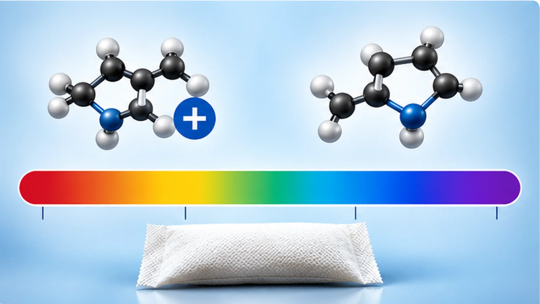
A 2026 review describes how pouch materials and ingredients affect nicotine delivery. Two useful examples are nicotine salts and nicotine polacrilex. These are not two different kinds of nicotine. They are different ways of incorporating nicotine into a product.

How Does a Nicotine Salt Work?
ZYN uses nicotine in salt form, specifically nicotine bitartrate dihydrate. A nicotine salt is formed when nicotine is combined with an acid (e.g., citrate, lactate, malate, etc.). In contact with saliva, soluble nicotine salts can dissolve, allowing nicotine to move out of the pouch.
Dissolving is not the same as being absorbed. Once nicotine is in saliva, it still needs to cross the lining of the mouth. How readily it does that depends partly on pH, which we will explain in Part 3.
How Does Nicotine Polacrilex Work?
“Nicotine polacrilex is not a nicotine salt; it is an ion-exchange resin complex used extensively in nicotine replacement products.” For example, it is found in gums and lozenges.
Rogue pouches contain nicotine polacrilex. In this formulation, nicotine is held on a material called an ion-exchange resin that acts as a carrier. When saliva enters the pouch, ions in saliva (e.g., sodium, potassium, calcium) can exchange places with nicotine held on the resin, releasing it from the pouch.
The name “ion exchange” describes that swap. It is not an extra dose of nicotine or a different nicotine molecule. It is a way of controlling when nicotine becomes available to leave the pouch.
That extra release step matters when researchers try to predict delivery from product chemistry. The resin, the saliva around it, and the pouch’s other ingredients all affect the process.
Why Do Formulation Differences Matter?
Researchers at Ohio State University compared ZYN 6 mg Peppermint and Rogue 6 mg Peppermint in 62 adults who usually used moist snuff (e.g., dip). Participants used each pouch for 30 minutes in separate sessions. The researchers also included 2 g of each participant’s usual moist snuff product.
The two pouches contained nearly identical amounts of nicotine. After 30 minutes, however, the average nicotine level measured following ZYN use was 14.8 ng/mL, compared with 7.1 ng/mL following Rogue use.
These differences are consistent with the idea that formulation and chemistry influence nicotine delivery. But they do not prove that nicotine salt or polacrilex alone caused the result. The study compared two finished products that differed in several ways, including their moisture and other ingredients.
| Same strength on the can, different pouch. Lab testing can confirm how much nicotine a pouch contains and measure properties such as pH, but formulation shapes what happens next. See what Nicokick tests in pouches, and why: Our Pouch Testing Standards. |

Is One Formulation Better?
The study does not establish that, and some adult nicotine consumers prefer a slower release to a faster release. A higher nicotine concentration measured during a clinical session is not a measure of product quality. The most useful conclusion is narrower: products with the same mg listed on the can may release and deliver nicotine differently.
It is also important not to confuse a nicotine salt with protonated nicotine. “Nicotine salt” describes a formulation ingredient. “Protonated” describes the electrical charge nicotine carries in its surroundings. Nicotine can change between charged and uncharged forms after it enters saliva. For more on this, see Part 3 of this series.
Key Terms Explained
| Term | Explanation |
| Formulation | The combination of ingredients and materials used to make a pouch. |
| Nicotine salt | A form made by combining nicotine with an acid. Soluble salts can dissolve when they contact saliva. |
| Nicotine polacrilex | Nicotine held on an ion-exchange resin, which serves as a carrier. |
| Ion-exchange resin | A material that holds nicotine and can release it when ions in saliva exchange places with it. |
| Nicotine release | Nicotine becoming available from its carrier and moving out of the pouch; this is not the same as absorption. |
| Protonated nicotine | Nicotine with an extra hydrogen ion attached, giving it a positive charge. This describes its chemical state, not simply the ingredient used to make the pouch. |
| Anion | A negatively charged ion. In a nicotine salt, the acid used (such as citrate, lactate, or malate) supplies the anion that pairs with positively charged nicotine. |
| Cation | A positively charged ion. Protonated nicotine is a cation, as are the sodium, potassium, and calcium ions in saliva that can exchange places with nicotine on an ion-exchange resin. |
FAQs
- No. They are different ways of incorporating nicotine into a product. A nicotine salt forms when nicotine is combined with an acid; polacrilex holds nicotine on a resin that releases it through ion exchange.
- No. Release makes nicotine available outside its carrier or pouch. Absorption is the separate step of crossing the lining of the mouth. Factors such as pH help determine how readily that happens.
- No. It shows a difference between the specific finished products under the study conditions. Other properties also differed, so the results cannot be attributed to the nicotine carrier alone.
Connecting The Dots
Part 1 showed that the label does not tell the whole story. Part 2 shows one reason why: nicotine salts and polacrilex use different release mechanisms. But after nicotine is released, another factor affects how easily it crosses the lining of the mouth: pH.
Important Disclaimer: This article is provided for informational and advertising purposes only. It does not make any claim that nicotine pouches are safe, safer than cigarettes or other tobacco products, or effective for smoking cessation. Any reduced-risk or modified-risk claim would require separate authorization from the U.S. Food and Drug Administration for the specific product.
Nicotine is addictive and intended only for adults age 21 and over who currently use tobacco or nicotine. Adults considering changes to their tobacco or nicotine use should consult a qualified healthcare professional.