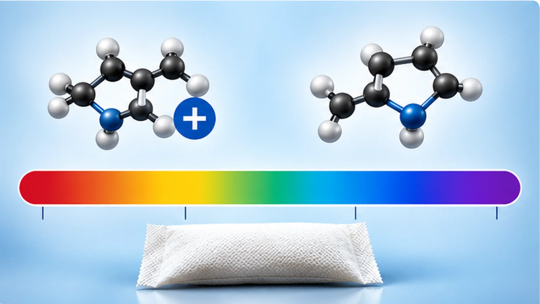


Part 1 - Nicotine Pouch Strength: Why Milligrams Aren't the Whole Story
The amount of nicotine in a pouch is not the same as the amount that reaches the body.
The nicotine strength printed on a pouch can is useful information, such as knowing a 6 mg pouch contains more nicotine than a 3 mg pouch. But that number does not tell us how much nicotine will be released during use or how quickly it will be absorbed.
That difference is the starting point for this pouch science series, based on a 2026 review in the journal Materials. The article brings together research on how hydration, pH, ingredients, and pouch structure interact to influence nicotine delivery. The author’s main point is that “Nicotine content alone is insufficient to predict onset, peak exposure or total systemic uptake.”
A 2022 clinical study offers a useful example. Researchers looked at five pouches with different strengths. The products with more nicotine did not consistently produce higher nicotine levels in the blood.
What Does Nicotine Delivery Mean?
Researchers can analyze blood samples collected at set times after a participant starts using a nicotine product. These samples are used to measure how nicotine levels change over time. This tells them how nicotine levels in the body change during and after product use.
Three measurements appear frequently in these studies. Peak concentration (Cmax) is the highest nicotine level measured in blood. Time to peak (Tmax) shows when that level is reached—not when absorption first begins. Overall nicotine exposure (area under the curve, AUC) accounts for nicotine levels across a defined measurement period. A slower rise does not necessarily mean lower overall exposure.
What Did The Clinical Study Test?
The randomized crossover study enrolled 35 adults in Sweden who used both tobacco snus and cigarettes. Participants tested five mint-flavored nicotine pouches containing 6–10 mg nicotine per pouch, as well as a cigarette, in separate sessions after at least 12 hours without using any nicotine products. A crossover design lets researchers compare products in the same participants rather than comparing separate groups of people.
Each pouch was kept under the upper lip for 60 minutes, and blood samples were collected over 6 hours. The cigarette session allowed 5 minutes of smoking. Those use durations are important when interpreting the cigarette comparison; the pouch results also describe a specific 60-minute protocol, not a recommended use time.
More Nicotine Did Not Mean a Higher Peak Concentration
The five pouches did not rank in the same order for nicotine content and measured exposure. The highest to lowest levels of nicotine measured in the blood corresponded to the products that were 1) 9 mg, 2) 6 mg, 3) 10 mg, 4) 8 mg, and 5) 10 mg. It is important to note that these were products available on the European market in 2019 and 2020, so the results could look different for products in other markets or at different time periods.
Peak Concentration Is Only Part Of The Picture
Median time to peak was 60–65 minutes for the pouches, compared with 7 minutes for the cigarette. Because pouches were used for 60 minutes and the cigarette for 5 minutes, these results do not describe equivalent use durations or establish everyday nicotine exposure.

What Could Explain The Difference?
The 2026 review provides a framework for understanding these findings. Nicotine must become available from the pouch, move through saliva, and cross the lining of the mouth. Hydration, pH, ingredients, and the internal structure of the pouch can influence those overlapping processes. Nicotine content is just one part of the equation.
The clinical study compared products from different European brands, not otherwise identical pouches with one ingredient changed. It demonstrates differences in delivery but does not show which product characteristics contributed to the differences.
Key Terms Explained
| Term | Explanation |
| Nicotine content | The amount of nicotine contained in a pouch, distinct from the amount absorbed during use. |
| Nicotine absorption | The process by which nicotine enters the body after it is released from the pouch. |
| Peak concentration | The highest nicotine level measured during a study session. |
| Time to peak | The time from starting product use to the highest measured nicotine level; not the time when absorption first begins. |
| Overall nicotine exposure | A measure that accounts for both nicotine levels and how long nicotine remains in circulation over the measurement period. |
| ng/mL | Nanograms per milliliter: the unit used here to report nicotine concentration in blood samples. 1 ng = 0.000001 mg, and the average adult has about 5,000 milliliters of blood. |
FAQs
- No. The label describes the nicotine content of the pouch. Release from the pouch and absorption into the body are separate steps, influenced by what is in the pouch and how it is used.
- Yes. Nicotine delivery also depends on factors such as pH, moisture, ingredients, and how long the pouch is used. Two pouches with the same labeled strength can therefore deliver different amounts of nicotine.
- Researchers collect blood samples at set times during and after product use to measure how nicotine levels change under the study conditions.
Connecting The Dots
Nicotine content alone cannot describe delivery, and this has been shown in clinical studies. The takeaway is not that nicotine content is irrelevant. It is that understanding a pouch requires looking beyond the milligrams on the label to how nicotine becomes available for absorption. Part 2 takes a closer look at two ways nicotine can be incorporated into a product.
| Does the can match the label? Independent lab testing measures the nicotine in each pouch and compares it with the declared strength. See what Nicokick tests, and why: Our Pouch Testing Standards. |
Next: Nicotine Salt vs. Nicotine Polacrilex: What’s the Difference?
Important Disclaimer: This article is provided for informational and advertising purposes only. It does not make any claim that nicotine pouches are safe, safer than cigarettes or other tobacco products, or effective for smoking cessation. Any reduced-risk or modified-risk claim would require separate authorization from the U.S. Food and Drug Administration for the specific product.
Nicotine is addictive and intended only for adults age 21 and over who currently use tobacco or nicotine. Adults considering changes to their tobacco or nicotine use should consult a qualified healthcare professional.