
Nicotine Pouch Tax: Why Prices Are Changing in Some States
Nicotine pouch taxes are changing—and when they do, the price you see can change with them. These increases are set by state lawmakers and tax authorities, not by Nicokick. Here is a straightforward look at how nicotine pouch taxes work, why more states are adopting them, and what recent developments mean for adult consumers.
What is a Nicotine Pouch Tax?
A nicotine pouch tax is a state excise tax applied to nicotine pouches in addition to ordinary sales tax. Depending on the state, it may be calculated as a percentage of the wholesale price, by product weight, per pouch, or per container. The tax is usually collected earlier in the supply chain, but it can ultimately raise the price paid by adult consumers.
That is why a “75% tax” does not necessarily mean 75% is added to the checkout price. If the rate is based on wholesale value, the calculation happens before retail markup and sales tax. The final impact can vary by product, distributor, and retailer.
How Did We Get Here?
Most state tobacco tax laws were written long before modern nicotine pouches became widely available. As the category has grown, states have taken different approaches. Some created a separate tax for alternative nicotine products. Others expanded older definitions of “tobacco products” or “moist snuff” to include tobacco leaf-free nicotine pouches. The result is a patchwork: the same can may be taxed very differently from one state to the next.
A September 2026 Tax Foundation analysis found that 20 states and the District of Columbia had incorporated nicotine pouches into their tax systems. The details vary widely. Some states tax pouches under broad “other tobacco products” categories, while others use a separate rate based on price, weight, or the number of pouches. The Tax Foundation argues that grouping tobacco leaf-free pouches with cigars, loose-leaf tobacco, and snuff under the same tax category does not account for differences in where these products sit on the “continuum of risk”.
That matters because the structure of a tax can be just as important as the headline rate. Using a consistent sample product—a can of 15 pouches sold for $4 wholesale and $6 at retail—shows how differently state rules can affect the same product.
That impact can be easier to miss when you buy a single can at a gas station, where you are focused on one shelf price. Online, adult consumers often buy several cans at once. The tax applies to every can, so the total can create real sticker shock when it appears across a larger order. The tax rate is not necessarily higher online—you are simply seeing the cumulative effect all at once.
What Changed in New York?
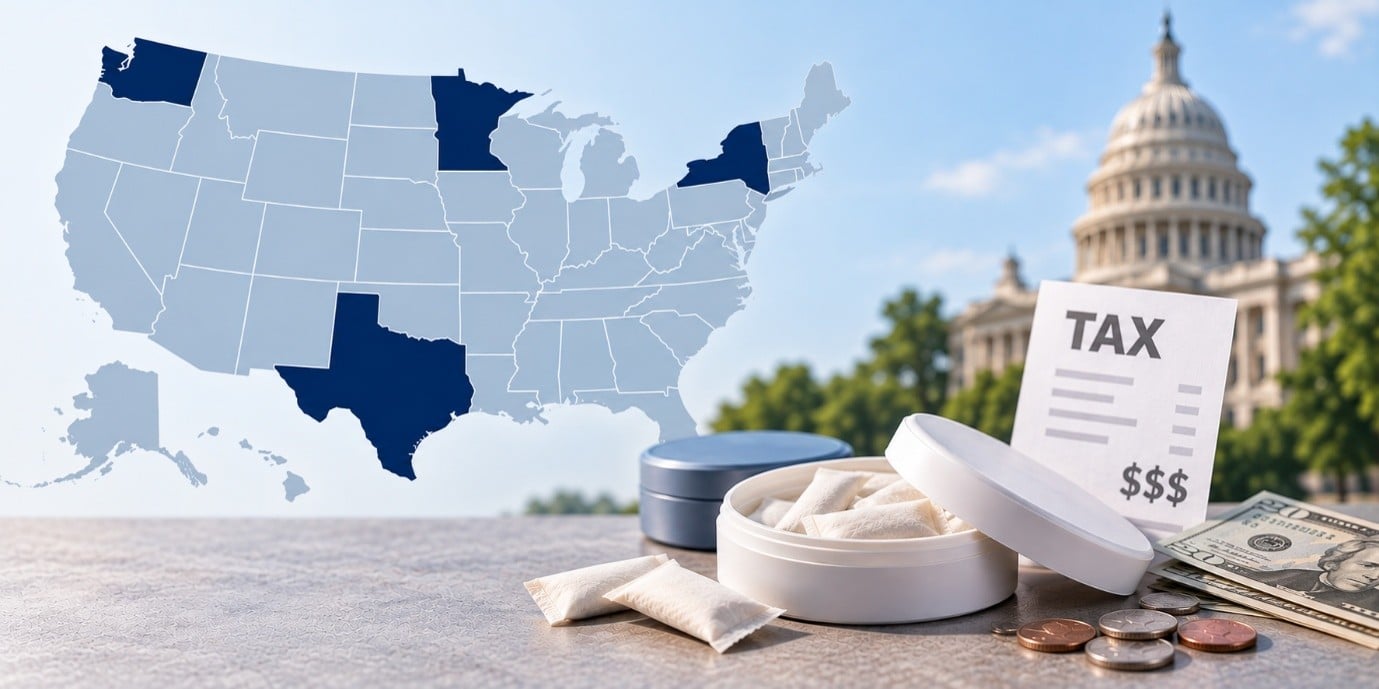
Beginning September 1, 2026, New York extended its tobacco products tax to “alternative nicotine products,” including tobacco leaf-free nicotine pouches. The rate is 75% of the wholesale price and is generally paid by the distributor. Businesses also had to account for untaxed inventory already on hand through a one-time floor tax.
For consumers, the important point is simple: this was a policy change enacted through New York’s state budget process. Nicokick did not create the tax. When the state raises the cost of selling a product in New York, that added cost has to be reflected in state-specific pricing.
What Changed in Texas
Texas is different from New York. The recent change did not come from a newly enacted tax increase. In May 2026, the Texas Supreme Court ruled that certain tobacco-free oral nicotine products could be treated as taxable “tobacco substitutes” under the state’s existing tax law. The decision reversed lower-court rulings and confirmed the state comptroller’s authority to apply the tobacco products tax to those products, although a separate constitutional challenge was sent back for further appellate review.
So, in Texas, higher tax-related costs flow from the state’s tax law, the comptroller’s interpretation, and the court’s ruling—not from a Nicokick decision to impose a new charge. We will continue to monitor how the state applies the ruling across products.
Which State Has the Highest Nicotine Pouch Tax?
Minnesota and Washington have the highest tax in the Tax Foundation’s state comparison. Both impose a 95% wholesale tax, which the organization estimates would add $3.80 to a sample can with a $4 wholesale price and a $6 retail price. Minnesota also applies a minimum amount per container: for a container weighing 1.2 ounces or less, the current minimum is $3.04.
Nicokick does not currently sell or ship nicotine pouches to Minnesota. The state is included here because it shows how far nicotine pouch taxation can go. These are taxes established in state law and administered by the Minnesota Department of Revenue—not fees created by Nicokick. Tax policies this aggressive can affect more than the price of a can; they can also limit competition, consumer choice, and where online retailers are able to operate.
Our Position: Adult Consumers Deserve Transparency and Fair Treatment
Nicokick follows every state’s tax rules, but compliance should not be confused with support. We do not believe adult consumers should be left guessing why a price changed or where the additional money goes. When a government-mandated tax affects the price of an order, we want that to be clear.
We also believe tax policy should recognize meaningful differences between product categories rather than automatically treating every nicotine product like a cigarette or traditional smokeless tobacco product. Tax decisions belong to state legislatures, tax agencies, and—in some cases—courts. Our job is to comply, explain the impact plainly, and keep working to give adult consumers competitive prices, broad choice, and a convenient way to shop.
The Bottom Line
If nicotine pouch prices rise in New York, Texas, or another state, check the state’s tax rules before assuming the retailer raised prices. Minnesota shows that these policies can go even further, affecting whether online retailers can serve a state at all. State policy is increasingly shaping what adult consumers pay—and the choices available to them. Nicokick will continue to explain these changes as they happen so adult consumers understand what is driving the price they see.
FAQs
- Nicotine pouches may be subject to state excise tax as well as ordinary sales tax. The rules depend on the state. Some states apply a percentage of the wholesale price, while others tax pouches by weight, quantity, or container.
- State taxes can raise the cost of selling nicotine pouches in one state but not another. Because tax rates and calculation methods vary, the same product may have a different price depending on the shipping destination.
- Minnesota and Washington have the highest percentage rate in the Tax Foundation’s September 2026 state comparison. Both tax nicotine pouches at 95% of the wholesale price. Minnesota also applies a minimum tax per container. Nicokick does not currently sell or ship nicotine pouches to Minnesota.
- New York taxes alternative nicotine products, including tobacco leaf-free nicotine pouches, at 75% of the wholesale price. The tax took effect September 1, 2026, and is generally paid by the distributor.
- Yes. In 2026, the Texas Supreme Court ruled that certain tobacco-free oral nicotine products could be taxed as “tobacco substitutes” under the state’s existing tobacco products tax law. This was a court interpretation of existing law, not a newly enacted tax increase.
- No. Nicotine pouch tax rates are set and enforced by state governments through legislation, tax rules, and, in some cases, court decisions. Nicokick is required to follow the applicable tax rules for each state it ships to.
Important: The products sold on this site contain nicotine. Nicotine is an addictive chemical that may increase heart rate and blood pressure and pose risks for individuals with certain medical conditions, particularly cardiovascular disease. These products are intended only for adult (21+) current nicotine users and are not for non-users. Sales to persons under 21 are prohibited.